

Category Archive: Uncategorised

  1. Penelope Gibbs

    Leave a Comment
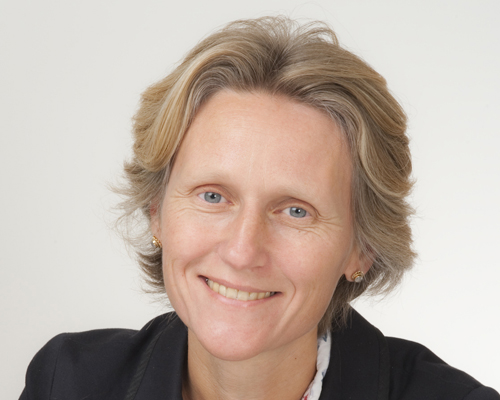
    Penelope Gibbs

    Director of Transform Justice


    Apart from your current organisation which other organisations that campaign do you admire and why?

    Policy Exchange – because whatever one thinks of their views, they have succeeded in getting the ear of this government and have influenced policy profoundly. They have championed police and crime commissioners and the breaking of the public sector “monopoly” over probation services. Without them these things might not have happened. I admire them because they are effective, though they probably wouldn’t describe themselves as campaigners.
    Citizens UK for campaigning for the Living Wage. They have argued well, got good evidence and successfully used community organisers as advocates. A worthy cause slowly and steadily won, mainly through face to face contacts and meetings.

    Generally are organisations getting better at campaigning since you began your career? If so, what’s changed?

    Organisations are getting better but the political space is getting more difficult to influence. MPs and Peers are efficiently whipped and few will defy their party.
    E-campaigning has revolutionised campaigning through helping charities to harness the passion of thousands of supporters. It’s a double edged sword though, because the more mass e-mail campaigns there are, the more difficult it is to break through.

    Which campaigner inspires you most?

    Ray and Vi Donovan’s son Chris was killed by a group of boys in horrible circumstances. Ray and Vi met their son’s killers in a restorative justice conference and felt “free” for the first time in years. They have set up a trust in memory of Chris and tour the country talking about their experience and the power of restorative justice. Ray and Vi truly have created good out of bad.

    What three attributes make a good campaigner?

    Passion
    Guile
    The ability to understand other points of view

    What’s the most rewarding or exciting campaign you’ve worked on and why?

    The Out of Trouble campaign I led for the Prison Reform Trust was very rewarding. The aim was to reduce the number of children and young people imprisoned in the UK. During the course of the five year campaign, the number of under 18 year olds imprisoned in England and Wales reduced by a third. A sign of true success is that the campaign ended in September 2012 but the numbers have continued to fall ever since.

    How do you feel campaigns will change over the next five years?

    I hope campaigns will focus less on changing the law. Legislation is very powerful but changing legislation does not necessarily produce social change and vice versa.

    What advice would you give someone starting their career in campaigning today?

    Be incredibly focussed. Campaigns with vague, amorphous aims tend not to work. Remember achieving your aim is the most important thing. It doesn’t matter if no-one knows who or what organisation was behind a positive social change, as long as it happens.

    If you weren’t a campaigner, what would you be?

    A civil servant. Civil servants have more power to influence positive social change than anyone else in government. But I would need to be able to conform and I’m not convinced I could.

  2. Letter published in Third Sector 17th January 2012

    Leave a Comment

    To hear it click: http://bit.ly/AjF6uF

    To read it….. here it is:

    Cathy Pharoah is correct in noting in her article “Charities can make a difference…” when she says that “…there are signs that the sector is increasingly rediscovering the power of advocacy”

    Charities despite smaller budgets are realising they can get a better return on their investment to reach their aims and goals by turning to advocacy and campaigning tactics. The change has been happening for a few years – began slowly in the late 1990’s then really took off around 2005 – Make Poverty History played an important role in this.

    We see new campaigns and charities investing in policy analysis and development then using it to make change by using campaigning, public affairs and parliamentary tactics. As a result, we’ve increased our staffing to cope with this by over 70% and moved into larger premises.

    It is a real shame that at a time where this expansion in campaigning is occurring that the NCVO’s Campaigning Effectiveness team which supported the sectors work no longer exists. There is a gap that needs filling if anyone is up for taking on the challenge.

  3. It’s a 5 horse race – 4 months to go to the General Election

    Leave a Comment

    As a former local Councillor, I’m used to regularly delivering leaflets saying “It’s a Two Horse Race” with a cheesy pencil drawing of racehorses and claims that it’s between our party and the main other party. Making out it’s going to be close, even if the end result is a 20-30% difference in the votes. All with the aim of getting your vote out on the day and to stave off complacency.

    Well no-one is going to be complacent about the result of the polling on May 7th. It’s looking like a 5 horse race – the usual 3 equines, plus UKIP and the SNP. Only the Tories or Labour can win it. But the other 3 parties will play a major role in who will get past the finishing line and actually into government.

    Some relevant pieces to read on how to deal with this year from a campaigning perspective. Tom Baker, the self-styled “Thoughtful Campaigner” who The Right Ethos helped place last year at BOND as their Head of Campaigns and Engagement has written this piece: 7 things you need to know about election campaigning.
    Also, worth reading: Three Predictions for Charity Campaigns in 2014 by Claremont Communications: Predications for charity campaigns in 2015.

    And worth knowing about Oxfam wrap on the knuckles before Christmas for being – though I hope it won’t rein any campaigns in too much as a result Oxfam criticised by charity commission.

    Pollsters are being cagey about the outcome, they remember 1992 too well, when most predicted a Labour majority. Sometimes it’s worth looking at what the bookies think as they can’t afford to be wrong.

    The current odds of 25 to 1 on a Labour/SNP/Liberal Democrat coalition looks quite an attractive price to me.
    Looking beyond the election, what if the Liberal Democrats got back into government with 6 times the number of seats of UKIP but only around half the votes. A massive campaign for a fairer voting system from the right wing?
    2015 – It’s going to be very interesting.

  4. Mariam Kemple

    Leave a Comment

    Mariam Kemple

    Whilst Campaigns and Advocacy Manager at Crisis Action


    Apart from your current organisation which other organisations that campaign do you admire and why?

    I’ve recently been inspired by the entire campaigning sector following the collective work we’ve all been doing in response to the ‘Gagging Law’. As someone who has a lot of experience in coalition campaigning, it’s been wonderful to see so many different voices from the UK charity sector speaking as one in a targeted and effective way to push for change.

    Generally are organisations getting better at campaigning since you began your career? If so, what’s changed?

    Absolutely – it’s been very exciting to see this development over the years. Campaigning has become much more professionalised and, with that, we’re seeing a stronger focus on monitoring and evaluation. As a result, the sector is becoming much better at identifying and achieving impact. We’ve also become better at learning from our colleagues in fundraising – building campaigner journeys that ensure supporters around the country can be turned into activists. Finally, the eventual embrace of new technologies – particularly social media – is having a fascinating effect on the responsive capacity of organisations.

    Which campaigner inspires you most?

    I regularly work with Sudanese or Syrian activists who put themselves at serious risk by speaking out on abuses taking place in their country. I am awed by the dedication and bravery they show in doing so – it is a privilege to work with them.

    What three attributes make a good campaigner?

    First and foremost, any campaigner needs to be passionate about their work. This is what you need to influence others, to push on through the long hours and to keep going in the face of disappointment after disappointment. Second, you need to be strategic – able to work out the most effective, efficient route to influencing your target. And, finally, you need to be flexible in order to adapt your strategy to the myriad of unexpected changes that any campaign will encounter.

    What’s the most rewarding or exciting campaign you’ve worked on and why?

    In March 2012 I ran a social media campaign for the first anniversary of the Syrian conflict – Unite for Syria. We had no budget and no time but through sheer hard work were able to convince activists and celebrities the world over to support a multimedia campaign. On the day, we reached millions upon millions of people and the campaign itself became the story. It was wonderful to create something from literally nothing and to create a global community of activists all working together – from Brazil to Indonesia, India to South Africa, Egypt to the US.

    How do you feel campaigns will change over the next five years?

    I hope that campaigners will continue to be more and more driven by monitoring and evaluation. I also expect that the medium for our tactics will change as the sector catches up with all that the internet has to offer. That said, I still believe that the core components of campaigning will remain resolutely the same and that the strength of a constituent’s handwritten letter to an MP will always be one of the most powerful tactics we can deploy.

    What advice would you give someone starting their career in campaigning today?

    Immerse yourself in the campaigns of the whole sector – sign up to every newsletter and campaign bulletin! Get a feeling for how different organisations engage their supporters, the ambitions they set for themselves and the success they obtain. Make sure you have experience of local campaigning – volunteer in your community and experience the day to day of influencing local institutions and decision-makers. Finally, I would encourage anyone to work in Westminster for even just a short period of time in order to understand the ‘other side’ of campaigning, so that as a campaigner you appreciate the environment your targets will be working in.

    If you weren’t a campaigner, what would you be?

    A legal barrister – I’d still have to be arguing for a living!

  5. Head of Resources and Enterprises – Full-Time, permanent £40k – Margate, East Kent

    Leave a Comment

    Turner Contemporary Website

    Since 2011, the Turner Contemporary has been one of Kent’s, the south-east’s and Britain’s most exciting assets in the visual arts scene.

    This role requires a driven person with passion and a commitment to contemporary arts. Also, the individual needs the skills and abilities to fully utilise the assets of the gallery – the spaces, the café, the shop – to maximise income in order to continue to provide free entry to anyone who wishes to enjoy the exhibitions.

    The individual must be entrepreneurial in their approach, but politically aware to the environment and sector that they are working in. As well as the commercial side, this role is responsible for overseeing the operational side of the organisation – its finances, human resources, IT and administration.

    The role:

    Lead the long term strategic business planning, income generation and policy development for Turner Contemporary.

    Ensure the effective, efficient and entrepreneurial operation of Turner Contemporary Enterprises and to review and improve our commercial strategy to maximise our ability to generate income.

    Responsible for the management of the financial, commercial, HR, administrative, and legal functions required to operate Turner Contemporary (charity) and Turner Contemporary Enterprises.

    Take strategic responsibility for the financial well-being of the organisation.

    Manage change within the organisation and support the development of the staff and Board.

    The candidate

    Entrepreneurial business skills applicable to an ambitious not-for-profit organisation with significant commercial activities.

    You will be a visionary, with strong creative ideas that translate into real achievable business plans.

    Good political nous and the ability to build credibility within the organisation and with senior stakeholders and partners.

    Will have significant relevant experience of strategic business planning and operational practices.

    Significant experience of finance, financial control setting, monitoring and managing budgets.

    Extensive experience of managing staff and associated employment issues.

    Deadline: Friday 21st November 2014

    To apply or for more information please contact Sonya Clampett at sonya@therightethos.co.uk

  6. What MPs want?

    Leave a Comment

    I’ve just read a study on MPs’ views on charities’ actions by nfpSynergy.
    Given that it took 3 individuals to email 154 MPs how acceptable it was to for charities to undertake the 6 different activities listed below it left me a bit cold. Especially as the report was given such an ostentatious and grandiose title of “Charity Parliamentary Monitor” – phew, pretty impressive, eh?
    The 6 charity activities in the report that MPs had to say were acceptable or not were:

    1. “challenging government policy”
    2. “holding a parliamentary reception”
    3. “highlighting the effects of a policy on its beneficiaries”
    4. “challenging the policies of political parties”
    5. “a state-funded charity challenging government policy”

    A bit of analysis by one of the 3 “box-tick counters” or someone else from nfpSynergy would have been useful.

    I’m not sure what the point of the study is – what inference we’re supposed to take from these figures. Are charities supposed to turn around and say, “look only 42% of Tory MPs think its ok for us to challenge government policy -maybe we should think again about doing anything”

    Or 90% of MPs think it’s acceptable to hold a parliamentary reception so that perhaps charities should be holding one every fortnight.

    If someone is attacking you, your beneficiaries and what you believe is right and committed to campaigning about, shouldn’t you consider perhaps doing more of what they say they don’t like rather than trying to please them?

    And is it that important what MPs say on what’s acceptable? Isn’t it much more important to assess how MPs respond to the campaigning actions of charities, learn from this and adapt your actions for the future to gain more campaigning success?

  7. Advocacy in Lithuania

    Leave a Comment

    Just back from Lithuania where I ran an advocacy and policy influencing workshop for a children’s charity and their partners. They were all focussed on challenging the existing policy of residential care for children and promoting the need for community based alternatives.

    Some were comfortable with advocacy, while for others it was something totally new. We started with seeking to define the external political environment by posing the question where does power lie in Lithuania?

    We divided up into small groups, and as ever, I was surprised when they reported back with their different assessments. It does show, I think, the importance of making your assumptions on the external environment explicit in any advocacy work and being open to be challenged on these assumptions.

    After some discussion, we got some degree of clarity that in seeking to promote policy or practice change we should look at three levels of power: the national, the municipal and families/ communities.

    Having established these three levels, we then set out to construct three influence trees to show the different routes to seek influence on these three targets.

    Having established our influence trees, we then began to debate how we might make progress in each of these three areas. To do so we used the theory of change approach. I have written about this many times in the past but the idea is so simple – you do something so that something else happens. We tried to set out our ‘so that’ chain for each area of focus.

    I was energised by this training as we were able to both convey the basics of advocacy but also to begin to develop an advocacy strategy. People learnt some new skills but also began to apply their new learning on their issue of concern. At the end of the course, people took down their flip charts with all of their work on them – they now seemed ready to begin their advocacy work.

  8. Enthusing me to vote

    Leave a Comment

    One of the drawbacks of having had a gap in my blogs is that I now find myself with a long list of things I have wanted to blog about – and this blog is one of them – maybe not too topical but just too interesting to ignore.

    Cast your mind back to 2012 and the elections for the police and crime commissioners. This was an initiative by the government to inject more democratic accountability into the strategic direction of local police services.

    What really got me going was the refusal by the government to allow a free delivery from the Royal Mail from each candidate to each address in the constituency. This was to be the first time that such posts had been elected, there was precious little media coverage, and all this made the refusal to grant a free delivery all the more hard to understand.

    I remember as a Parliamentary candidate, on the two occasions that I stood, that the free delivery from the Royal Mail was so important to allow candidates to make contact with every household in the constituency. Especially if you were operating on a tight budget, as I always seemed to be, this was such an important element in ensuring that voters knew about all of the candidates.

    But in this brand new election the government had refused to offer this to the candidates. How then were people going to make up their minds? Certainly in my local area, I received almost no information at all.

    So I decided for the first time, since I was able to vote, that I was going to abstain – this was a hard decision – I have always voted and think it is so important to do so. So many people have suffered and fought for us all to have the right to vote. Not only was I going to abstain, I was still going to the polling station to spoil my paper to show my disdain for this process. And I started agitating my friends and family to do likewise.

    Then on the eve of poll, I received an email from 38 Degrees. It was such a clever and well written email. Despite the late hour, it made me sit up and take notice.

    They focused on one issue: the privatisation of back-office police services. It highlighted that this was an issue (and had been earlier voted for by 38 Degrees supporters as a topic for action) but didn’t lecture me or tell what to do other than invite me to look at what the three candidates had said on this issue. I clicked through on the three links, was intrigued by their different opinions, and as I cared about this issue, I suddenly found myself motivated to vote in this election.

    Pretty impressive. Even now some 15 months on I am still impressed by this action. Despite my resolve to abstain, I was touched by this email, enthused by the need to vote and then I took action by voting. For me 38 Degrees were playing a vital part in re-energising democracy. They didn’t tell me how to vote but provided me with information that might encourage me to exercise my right to vote.

    As we enter the run-up to the European Parliament elections in May and then the General Election the year after, I am hopeful that we will see similar imaginative actions to energise people into casting their vote.

  9. Keeping the Passion Alive

    Leave a Comment

    At the end of last year I ran a day of campaign training for the Sheila McKechnie Foundation’s residential weekend. In addition to their campaign award winners, there were also campaigners, who had applied to join this weekend training.

    What was remarkable about this group right from the outset, was their passion for change on their issue. They all had a story and were so clear on the change that they were seeking on their issue. And their hunger for learning was so strong. As a trainer it was superb to be in such an environment. As we covered each campaign tool, you could just sense them reviewing it, and seeing how they could use each tool to strengthen their campaign.

    I have written before about the danger, as campaigning becomes ever more professional, that the spark and passion for change is lost. There is a danger that campaigning just becomes another professional discipline.

    I have been reading the new book by Liam Barrington-Bush, Anarchists in the Boardroom – how social media and social movements can help your organisation to be more like people. See http://www.morelikepeople.org/the-book/

    Very early on in his book, I was very taken by a compelling point he makes: he expresses his surprise on joining a NGO, which was set up to campaign, but by the time that he joined it, the passion and spark had been lost and it had become just another large bureaucratic organisation. How does this happen? Is it inevitable?

    I know when I have been recruiting campaigners, looking for professional competence and experience is really important. I look for a track record of making things happen. But I also look for that spark and passion on the issue.

    In the past I have been rung by head hunters promoting a senior and often very well paid campaigning post, but I have had to deflect their approach as it was just on the wrong issue for me.

    I do think that we should place importance on passion and enthusiasm in our campaigning. Don’t just take it as read. Let’s see commitment and passion for the cause valued highly when we recruit campaigners and then let’s nurture and encourage that passion – it’s a very special thing.